
Have you ever been working on a jigsaw puzzle and wondered about the first person to ever complete a puzzle?
As big puzzle nerds, we’re fascinated by the history of jigsaw puzzles. Did you know jigsaw puzzles go all the way back to the 1760s?
Keep reading to learn how jigsaw puzzles came to be, how they’ve evolved through the years, and more fun tidbits about their history.
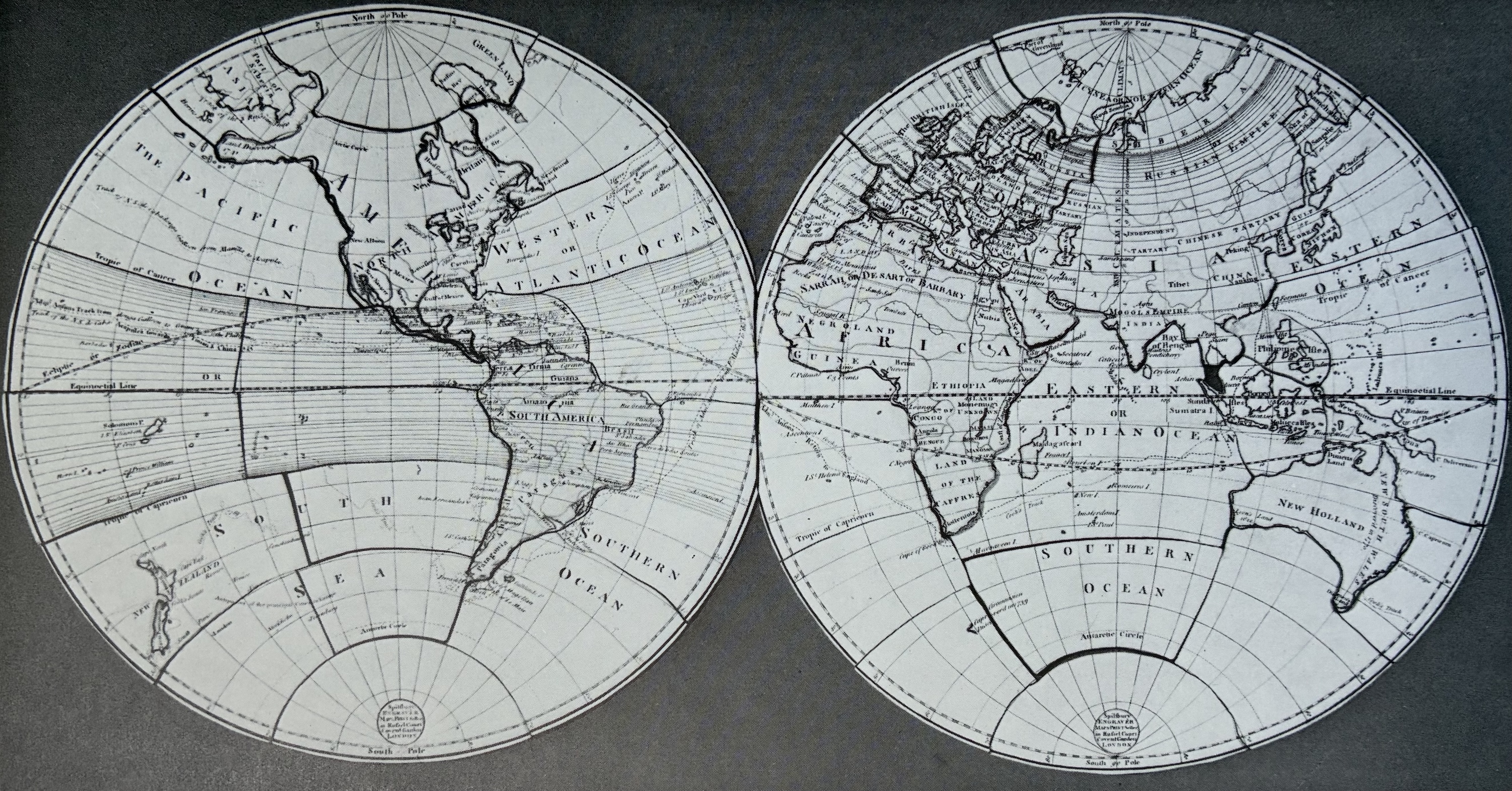
London cartographer John Spilsbury created the first known jigsaw puzzle around the year 1760. However, they weren’t called jigsaw puzzles yet.
Spilsbury created the first puzzles as educational tools for children. He mounted maps onto thin pieces of wood and cut each country into its own piece. Then, children would learn geography by putting the pieces back together.
Instead of jigsaw puzzles, Spilsbury called his invention “dissected maps.” The pieces didn’t interlock as the puzzles we know and love today do, but the objective was the same: deconstruct an image into several pieces and put it back together.
Some of the first students to learn their countries through jigsaw puzzles were the children of King George III and Queen Charlotte, taught by their governess, Lady Charlotte Finch.
From the late 1700s until 1800, puzzles continued to gain popularity, especially among wealthy families in Great Britain and America.
Early puzzle makers included Laurie & Whittle and William Darton. Manufacturers began creating other types of educational puzzles outside of geography so that students could use them to learn about history, botany, the alphabet, and zoology.
Thus, Spilsbury is credited as the inventor of the jigsaw puzzle. But the story doesn’t end there.
Flash forward to 1880, when Spilbury’s dissections got a rebrand. The introduction of the treadle saw changed the way puzzles were manufactured. The images were either painted or glued onto a piece of wood, and manufacturers would trace where to cut the pieces with a pencil on the other side of the wood.
Fun fact: although they became known as jigsaw puzzles, these puzzles were actually cut with a fretsaw.
After 1820, puzzles weren’t just for kids anymore. Wealthy families began working on puzzles together, as the Industrial Revolution gave them more leisure time.
At this point in history, jigsaw puzzles were primarily made with wood, which was costly and made puzzles inaccessible to families that weren’t wealthy.
That changed with the introduction of one simple material: cardboard.
Cardboard puzzles first came onto the scene in the late 1880s, but it took a few decades for them to gain traction. At first, they were only used for children’s puzzles.
Cardboard puzzles were viewed as cheap, and they didn’t make the manufacturers as much money as wooden puzzles, so they weren’t promoted as heavily.
The first puzzle craze in the United States occurred between 1907 and 1910, when adults finally saw the magic of puzzles that children knew all along. However, their puzzles still looked different from the puzzles we obsess over today.
The pieces didn’t interlock, and the boxes didn’t have puzzle images, so they were extremely challenging. Puzzles for adults also featured more artistic imagery rather than educational images for children.
Popular brands during this era included:
Even though cardboard puzzles existed at that point, wooden puzzles still held the lion’s share of the market. However, a historic event was about to turn the tide.
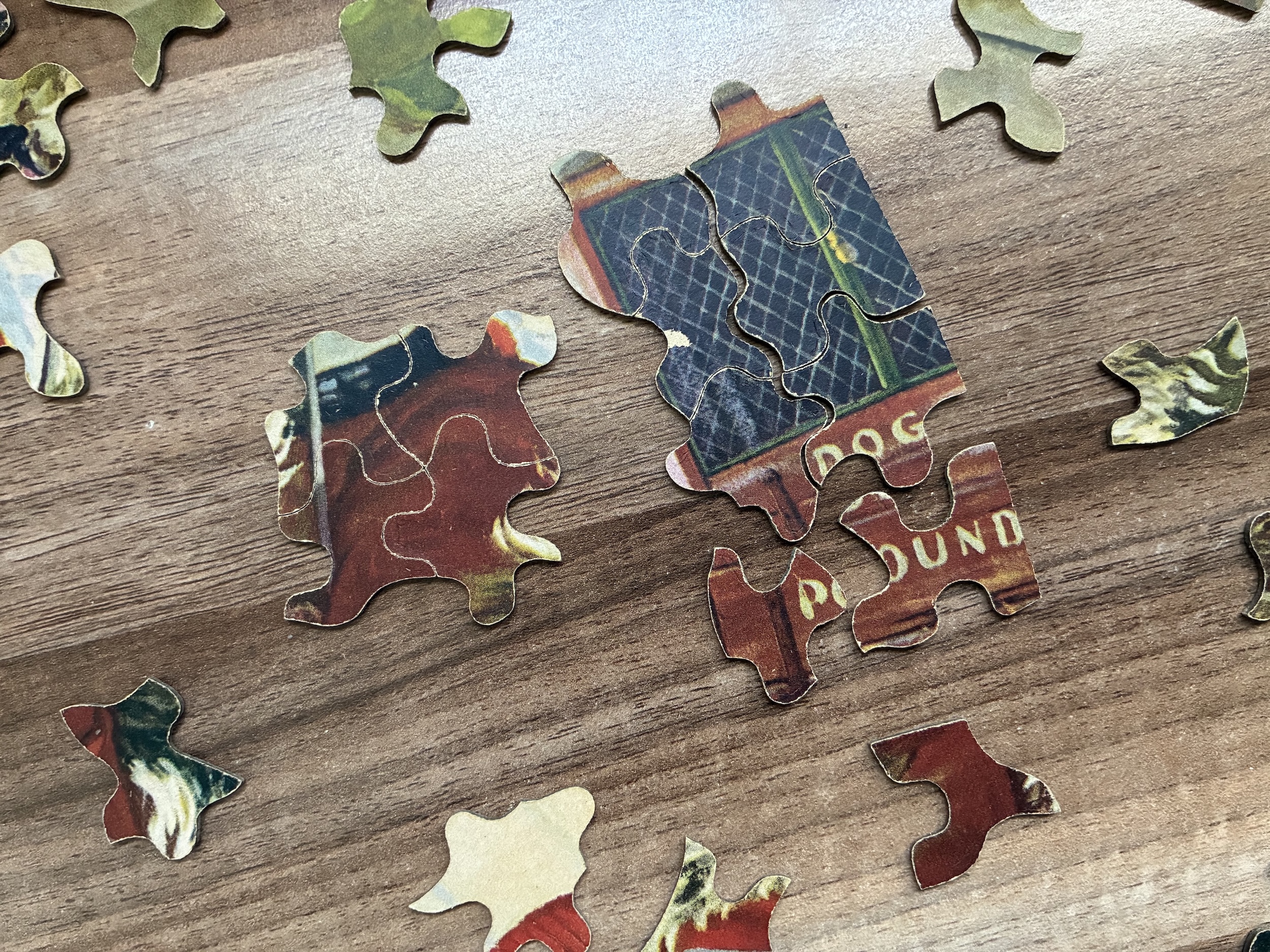
One of the most important times in the history of jigsaw puzzles was during the Great Depression of the 1930s. Finally, the cardboard puzzle, which was now die-cut and a fraction of the price of a wooden puzzle, got the attention it deserved.
Puzzles served as fun, inexpensive, reusable entertainment during difficult times. They provided comfort and a way for families to come together, not to mention a break from the news.
Cardboard puzzles became more difficult during this time, so they finally appealed to adults. New advertising methods also put puzzles in the public eye. In 1932, you could buy the “Jig of the Week” for 25 cents at a newsstand on Wednesdays.
Another major shift occurred during World War II, when wood shortages spiked the price of wooden jigsaw puzzles, and sales fell. Cardboard puzzles, on the other hand, took over as the new standard. Advancements in puzzle-making methods like die-cutting and the printing process also improved their quality, making them more desirable.
It was around this time that puzzles ventured into the fine art world, too. In 1965, Springbok Puzzles released Jackson Pollock’s Convergence as a 340-piece puzzle, heralded at the time as the “hardest puzzle in the world.”
The lower manufacturing cost of cardboard jigsaw puzzles made them easier to mass-produce, which contributed to the puzzle industry we have today. However, a new source of entertainment threatened the puzzle boom: television.
The puzzle craze faded when televisions were introduced into the family home in the 1950s. However, puzzles never fully disappeared. For the second half of the 20th century, they remained a staple form of entertainment in homes, schools, and beyond.
Puzzles continued to advance during these years, too. More interesting, complex puzzle images became popular, such as photography puzzles, novelty shapes, and collector brands. Higher piece counts also became more popular as puzzlers continued to challenge themselves.
Puzzle brands that we know and love today had their beginnings in these years, including:
During this era, puzzle culture thrived. Communities, similar to today’s Puzzle Parley, for example, began to form.
The puzzle industry was chugging along for years, with enthusiasts gathering for speed puzzling competitions, friends exchanging puzzles at puzzle swaps, and family members growing closer while working toward a shared goal.
However, puzzles got their time in the spotlight again during yet another major world event, the COVID-19 pandemic.
With people stuck indoors and trying to fill their time, demand for puzzles surged. Puzzle historians drew similarities between the pandemic boom and the boom during the Great Depression.
Once again, puzzles provided comfort during a difficult time. Working on a puzzle became a calming ritual that gave people a break from the news, brought families together, and relieved stress.
Since the pandemic, puzzles have become mainstream again. You can find puzzle influencers on social media, puzzling events in your town, and more puzzle brands than ever (including incredible indie brands).
Along with the third puzzle boom, another historic thing happened in the puzzling world in 2020: the creation of Completing the Puzzle, the first puzzle rental subscription.
Like many others, our co-founders were stuck at home during the pandemic, completing a marathon of puzzles. They were struck with an idea: what if puzzles could become less wasteful?
They recognized from their own puzzling habits that most puzzles were only completed once before they were banished to a closet.
They had the idea to start a puzzle rental service to bring puzzlers around the country together and keep more puzzles in circulation. The rest, as they say, is history.
Today, Completing the Puzzle is a community of over 60,000 happy puzzlers who love getting a new puzzle delivered to their doorstep every month. When they’re done, they simply pack it up and send it back so it can go to the next puzzler. Meanwhile, their next puzzle is on its way.
In the last six years, we’ve shipped out over 840,000 puzzles, and we’ve planted around 30,000+ trees, thanks to our initiative to plant a tree for each new subscription.
The best part is that we’re still just getting started. We’re dedicated to our mission of making puzzling more eco-friendly and community-oriented.
Jigsaw puzzles, puzzle technology, and the puzzling community have come a long way since 1760. What was once an educational tool for wealthy families is now a beloved pastime that anyone can enjoy.
At Completing the Puzzle, we’re proud to be part of the rich history of jigsaw puzzles, and we believe that puzzles are for everyone.
Want to experience the historic puzzle rental subscription for yourself? Join Completing the Puzzle today.